“I wonder why they’re always so calm”, I thought as I wound my way through the crowded street trying not to bump into people,
I’m referring to the nature of Thai people. Never once have I heard anyone shout in anger, or sound their car horn when someone steers in front of them. They just politely slow down so the other driver can enter the lane,
I’d say, with a population that is 90% Buddhist, that would be the reason. When you have a belief system founded on the idea of Karma and reincarnation, a philosophy deeply ingrained into the culture, then it’s naturally going to influence your mindset and behaviour.
Karma is the natural law of cause and effect, where a person’s intentional thoughts and actions directly shape their present and future experiences. Reincarnation is the continuous cycle of birth, death, and rebirth, driven by one’s accumulated karma, from which individuals ultimately seek liberation.
In other words, be kind to others by leading a good life.
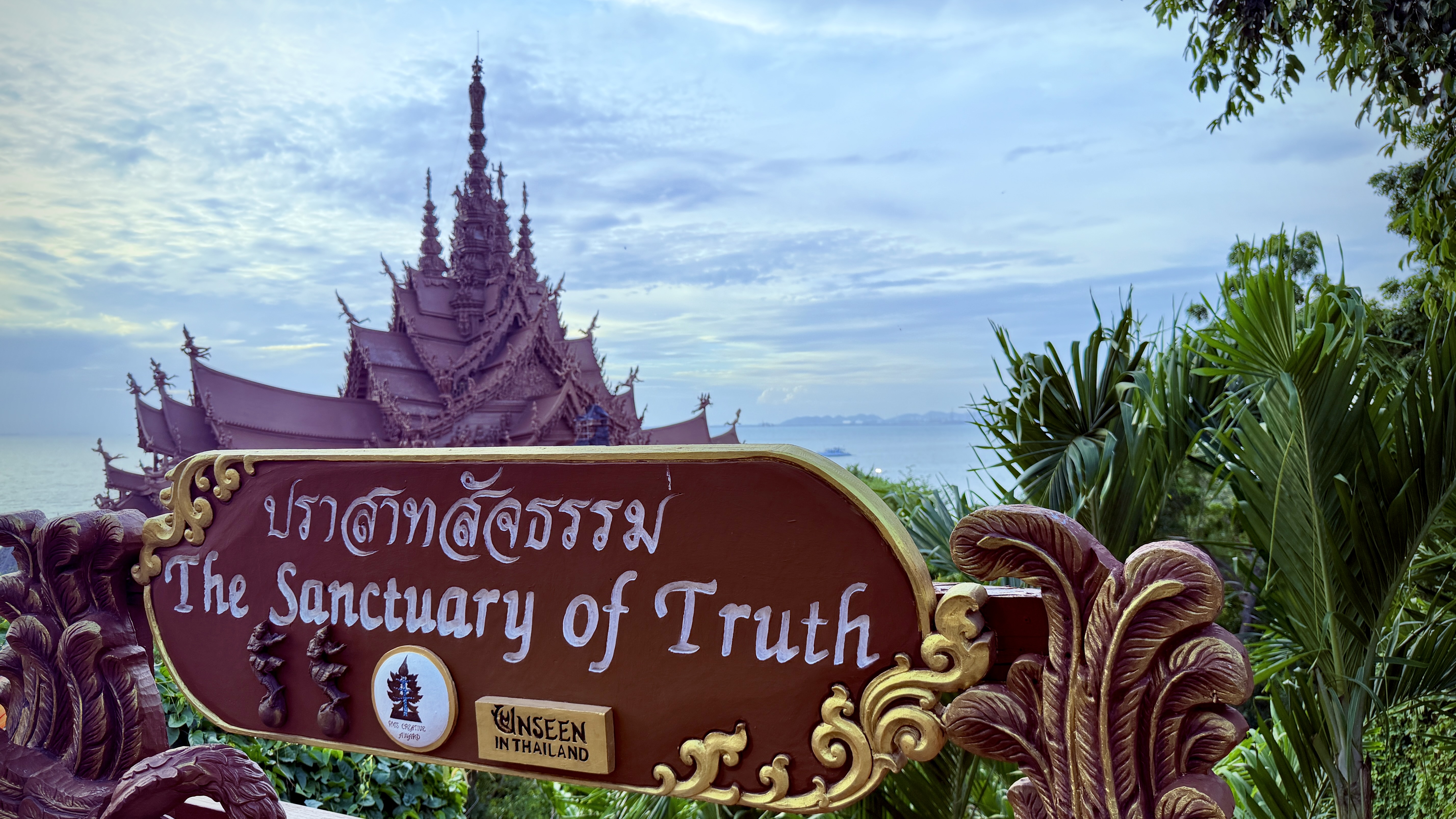
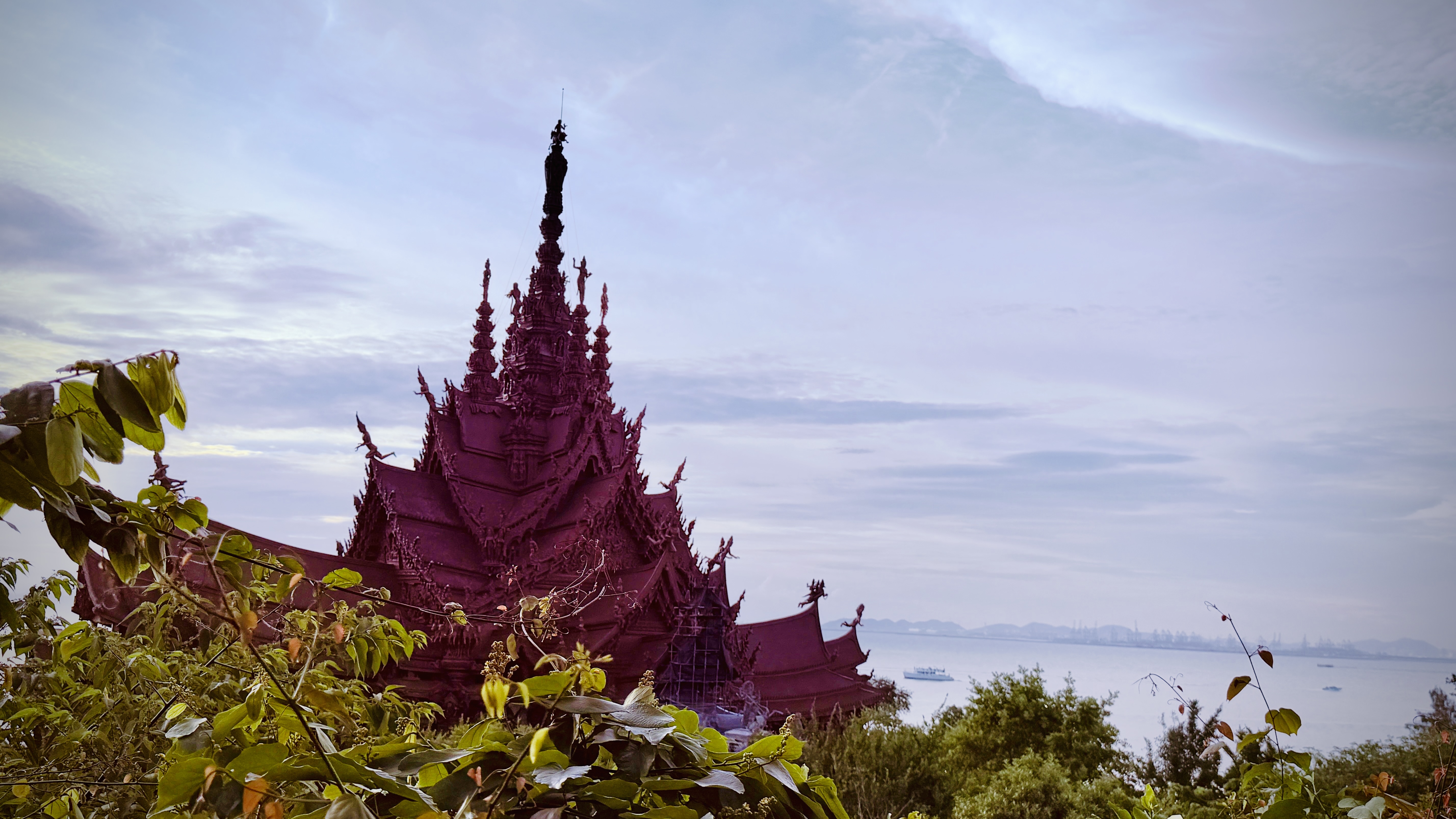
Which brings us to The Sanctuary of Truth.
The Sanctuary of Truth
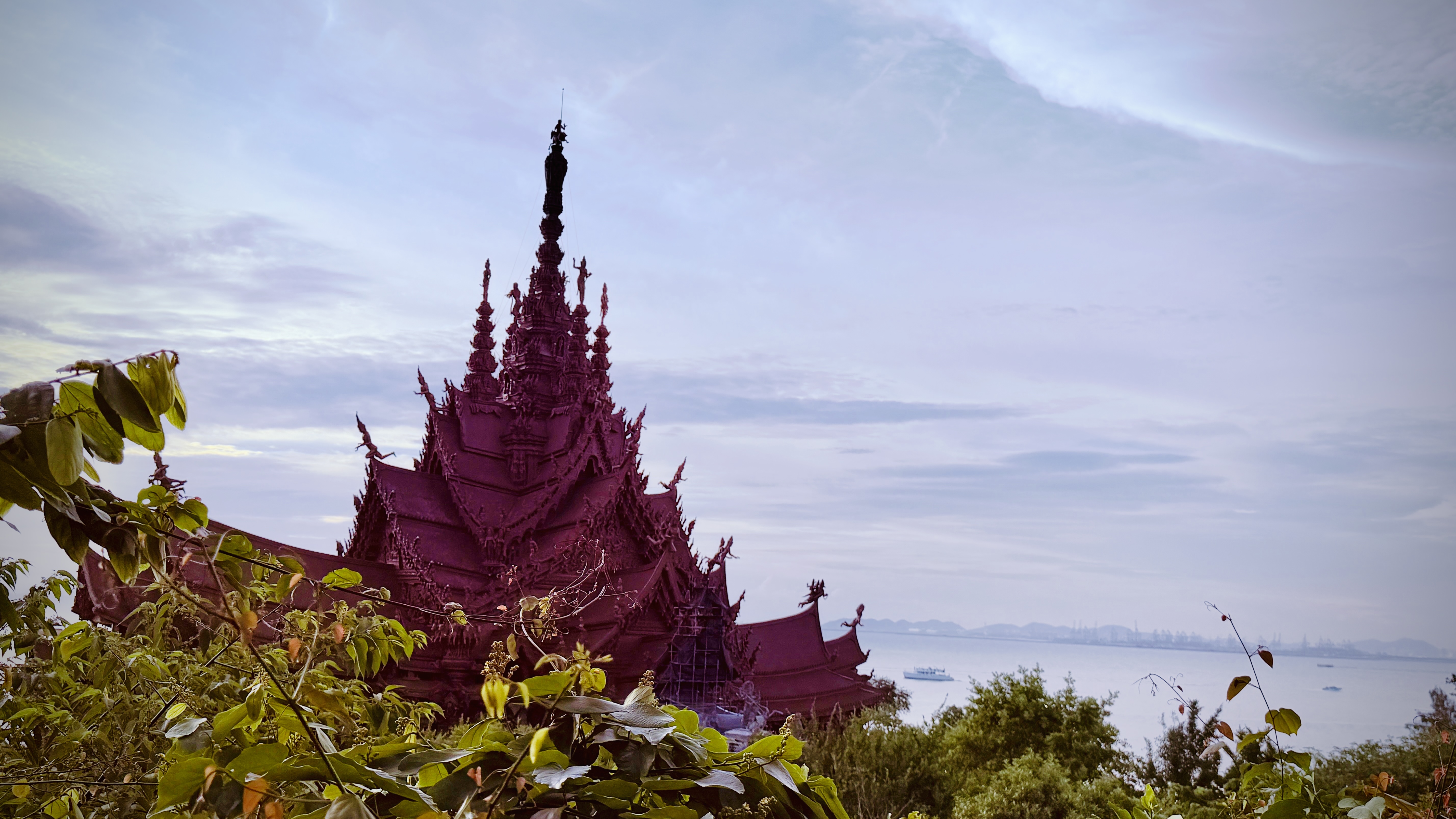
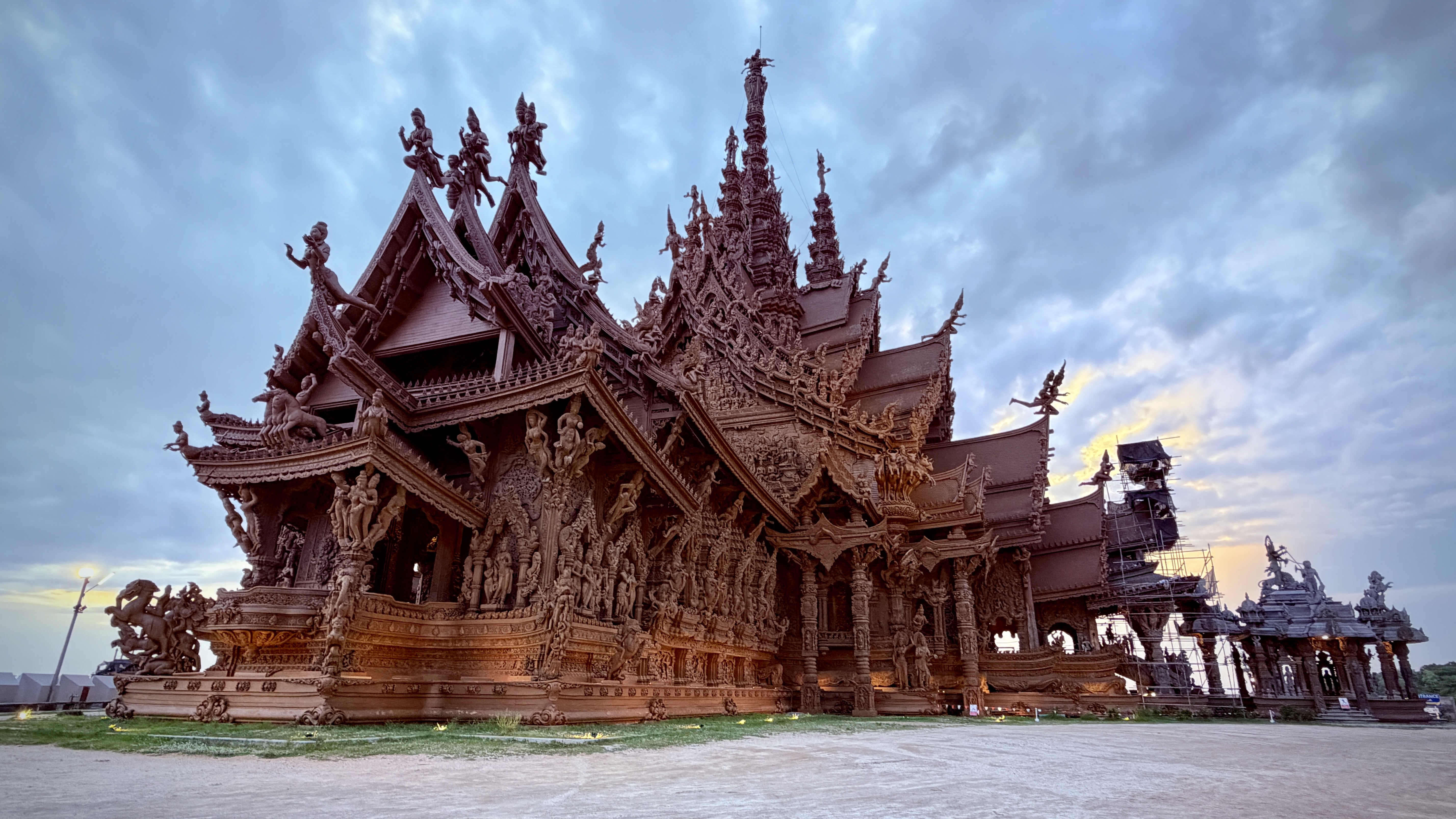
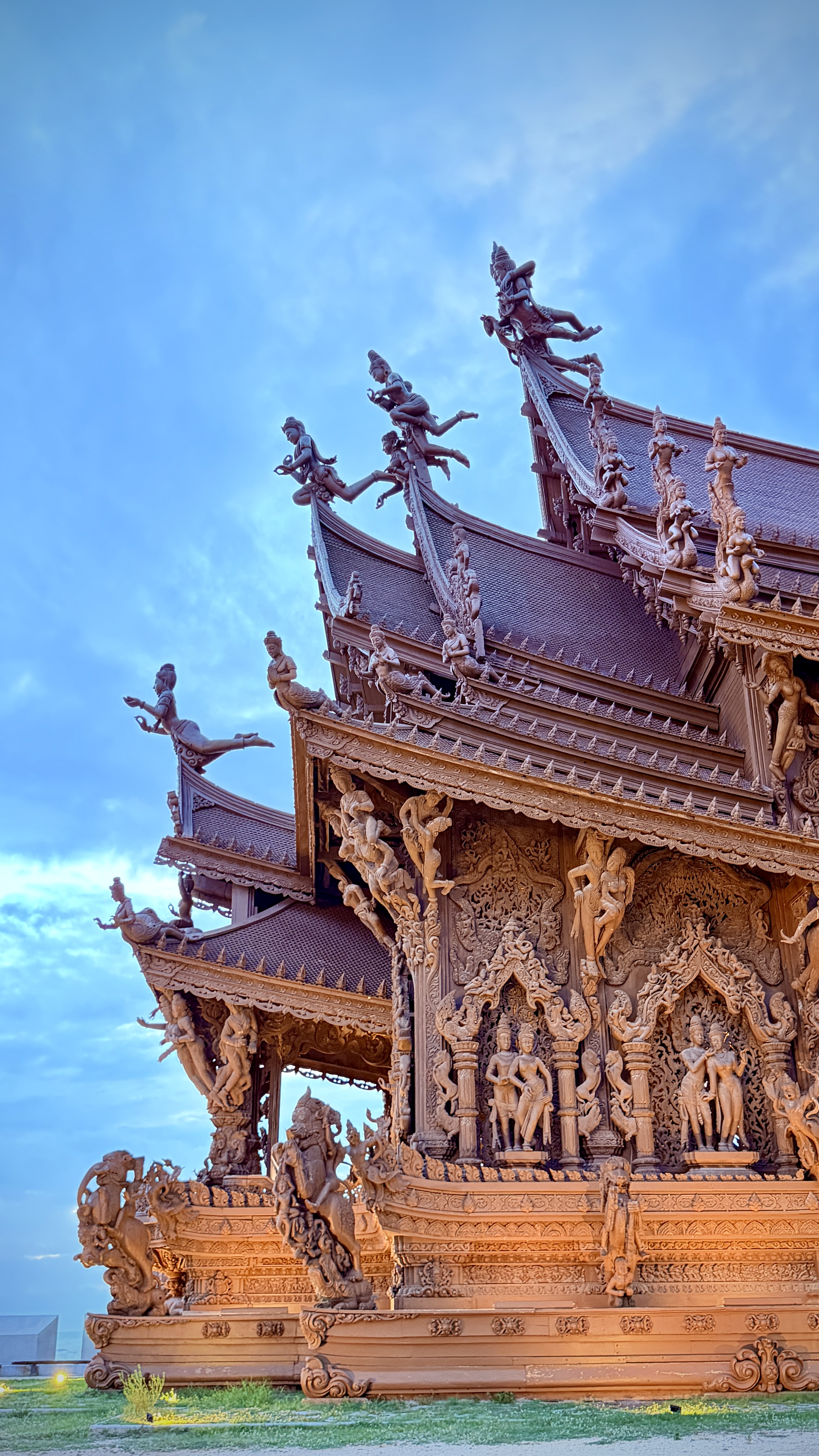
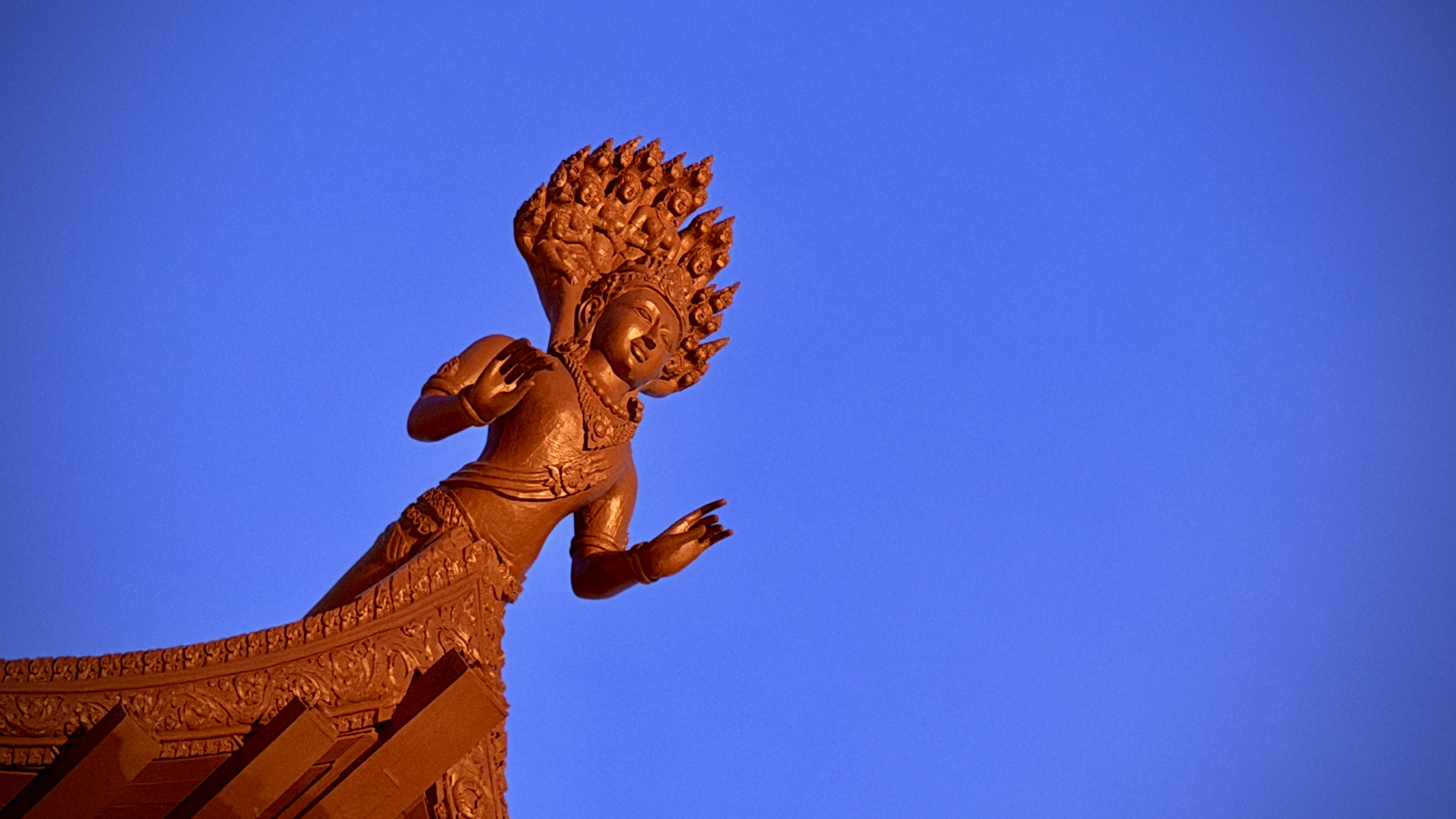
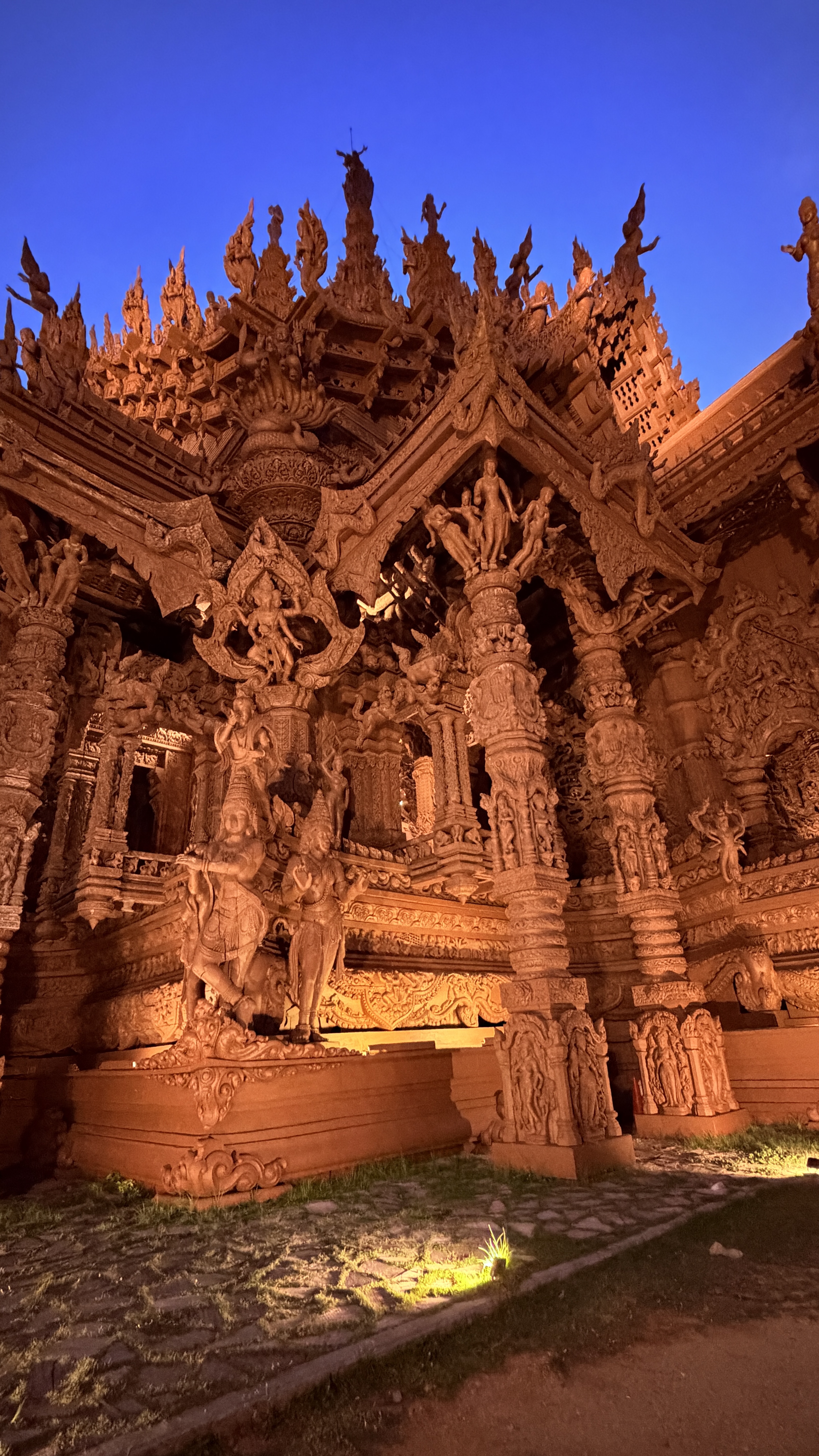
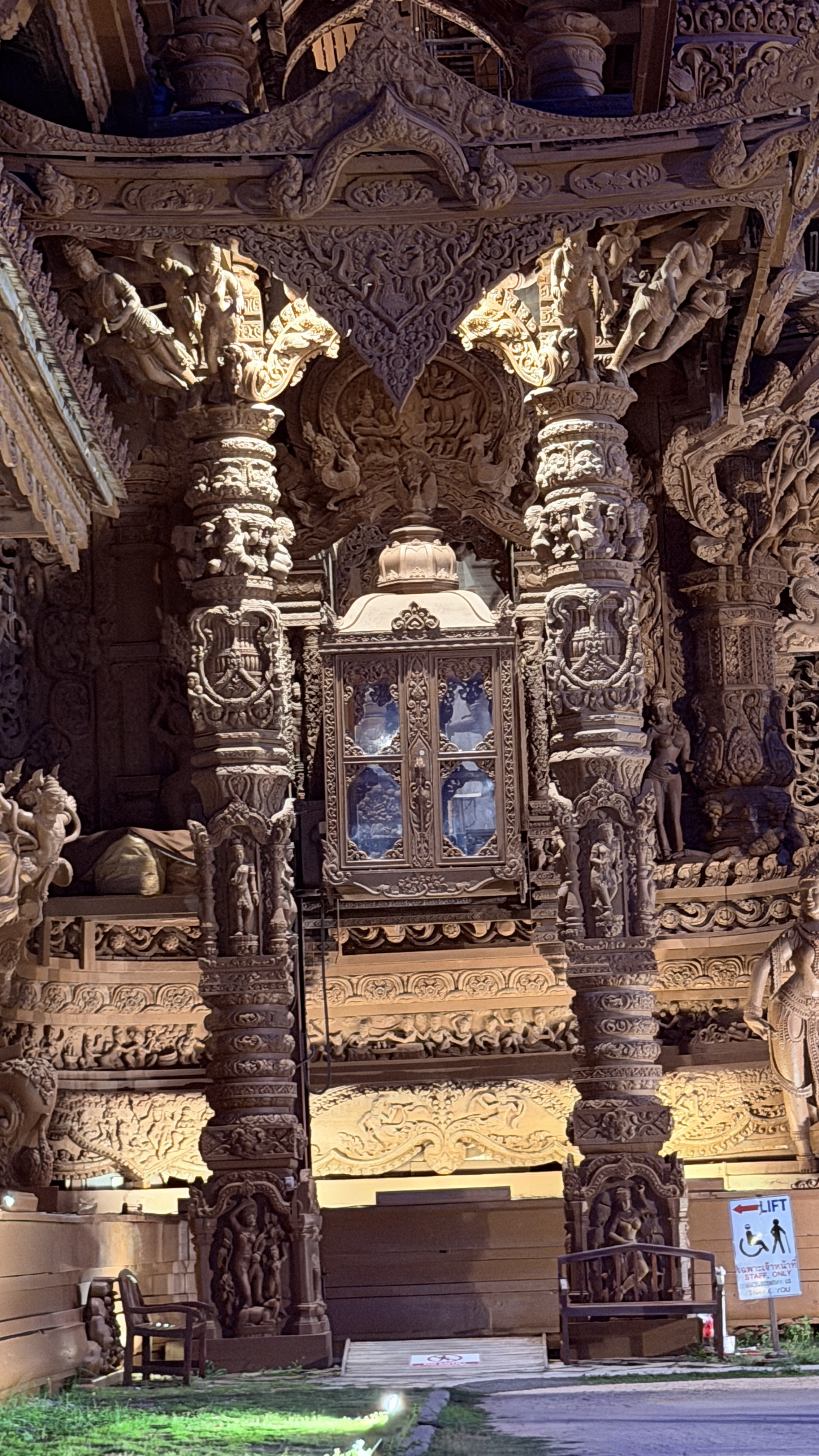
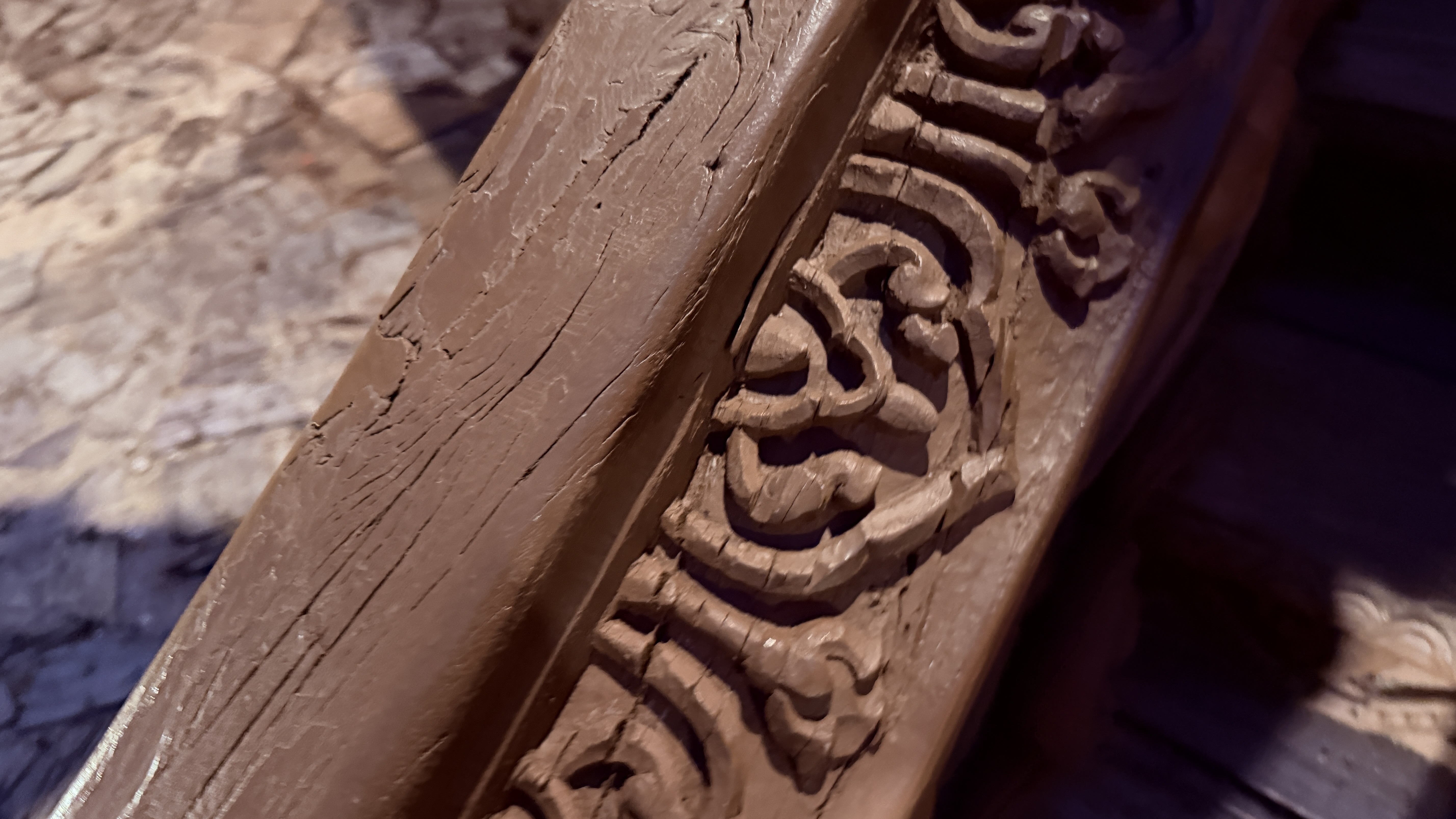
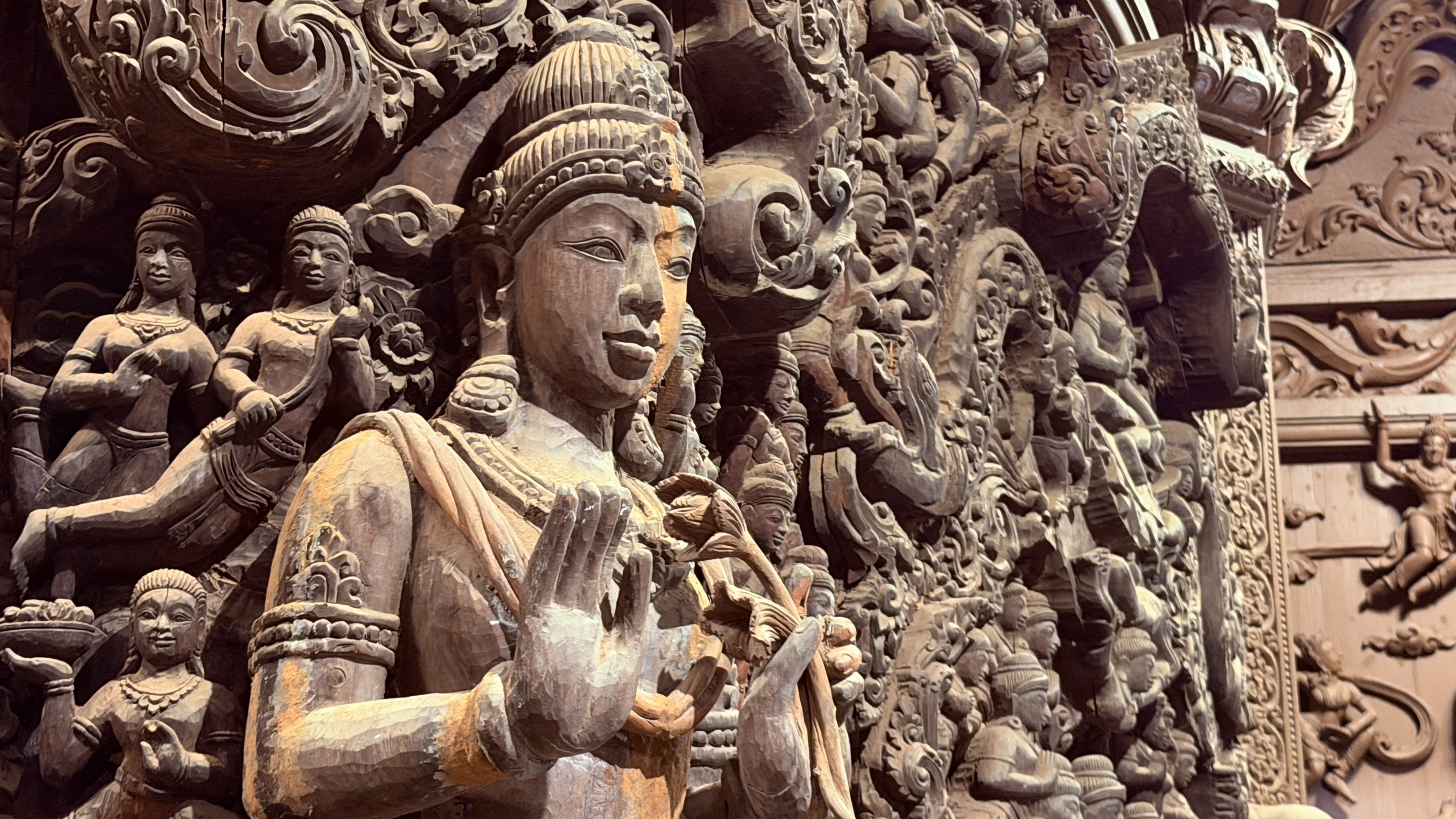
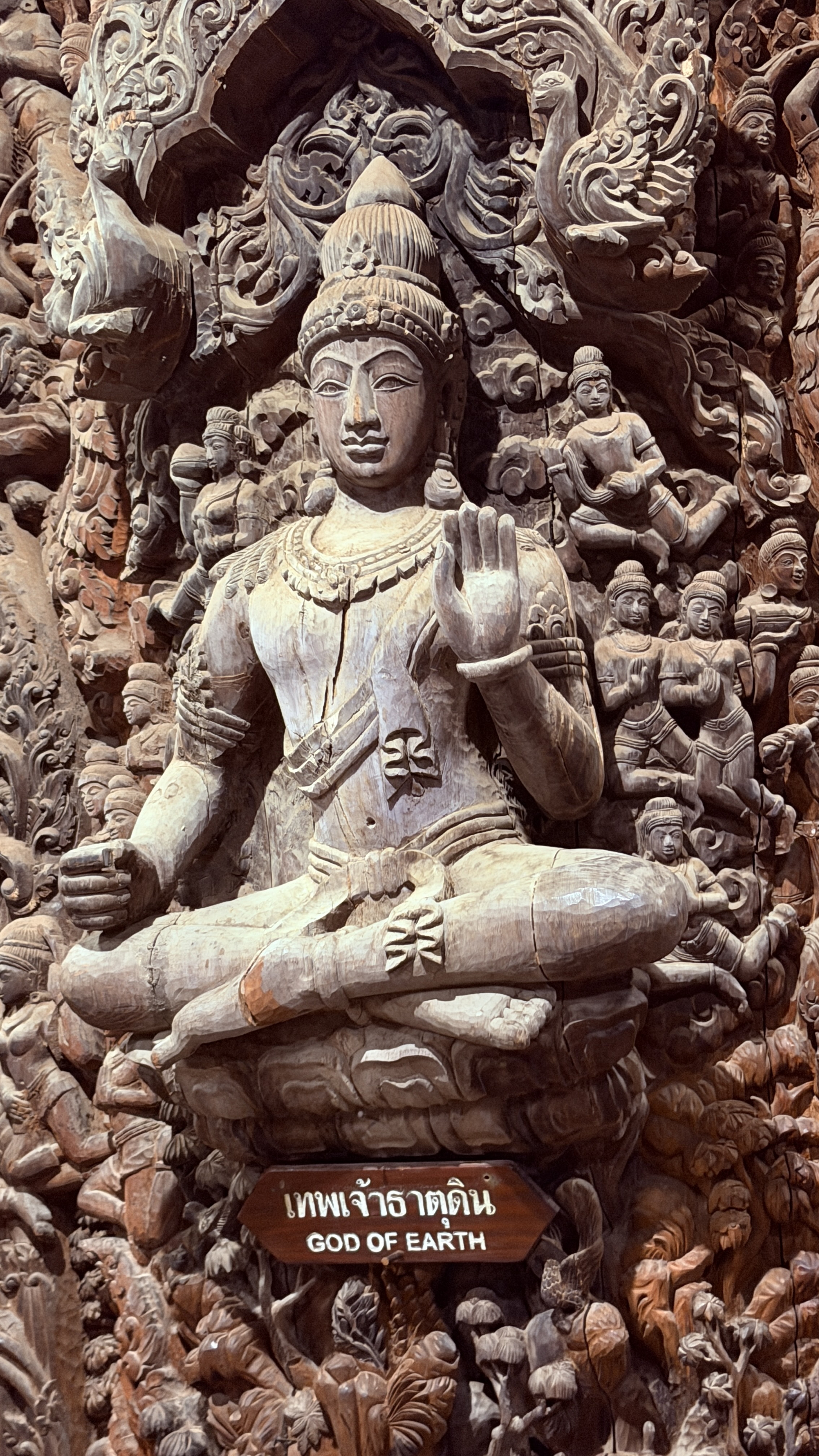
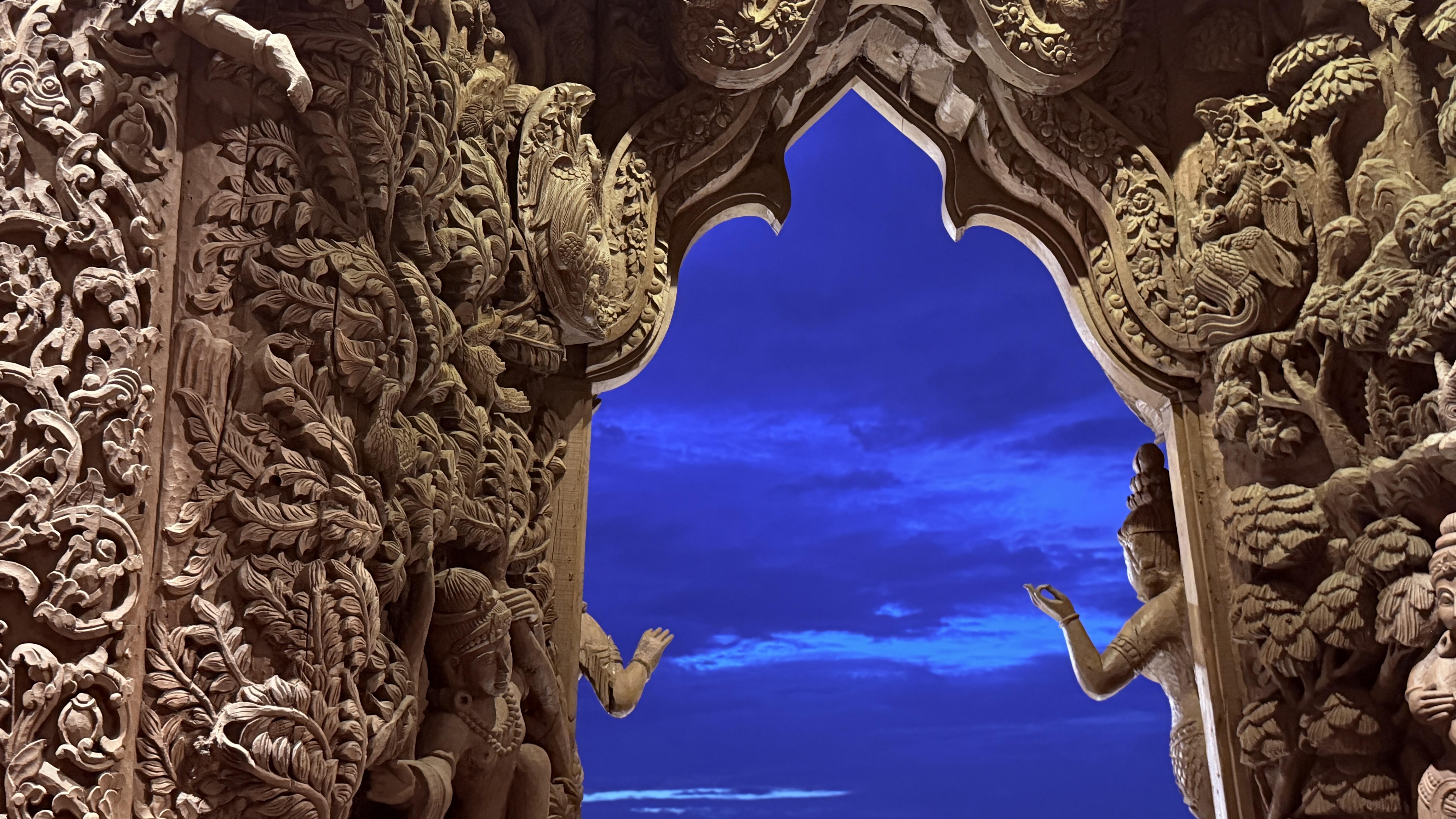
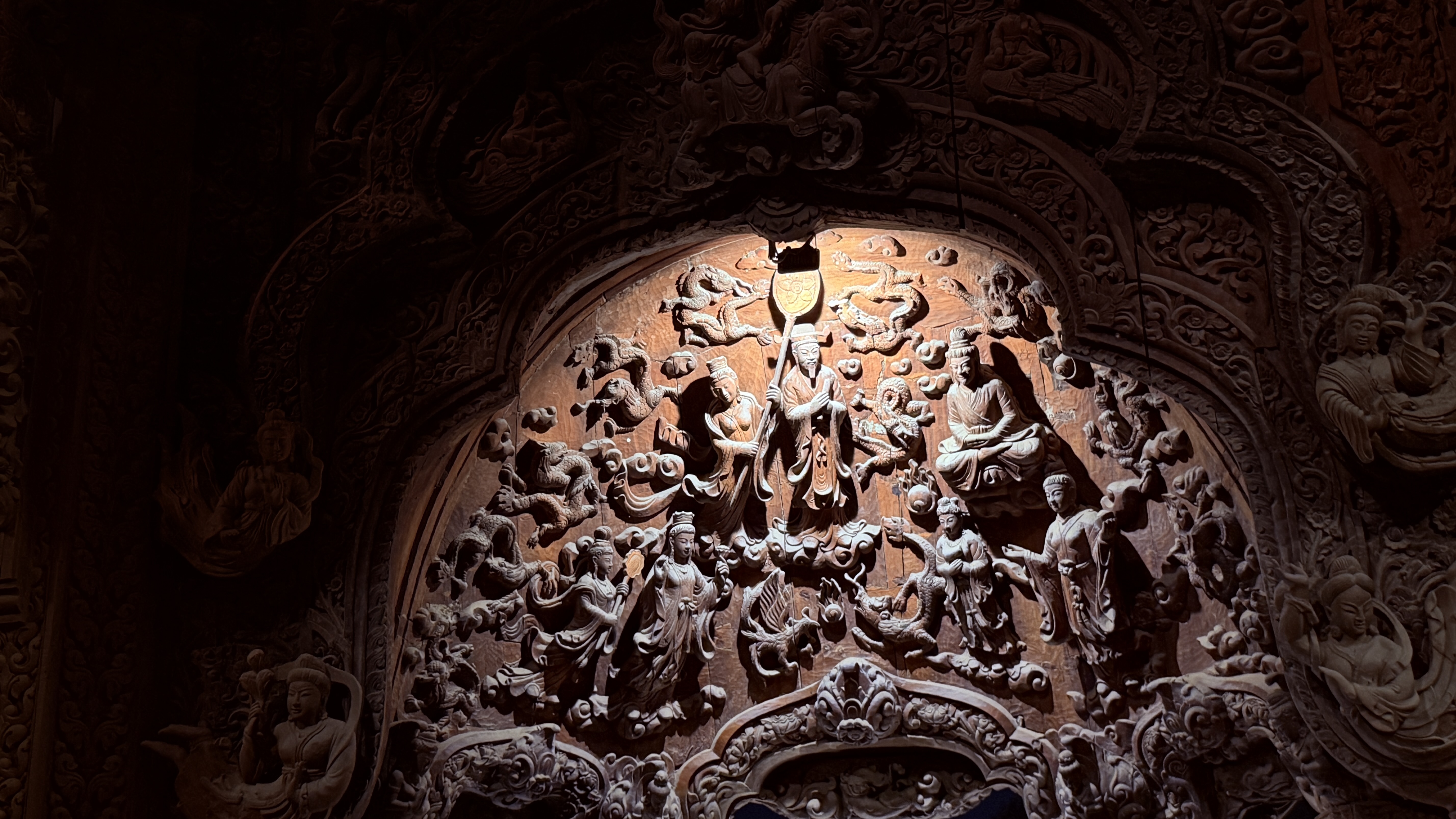
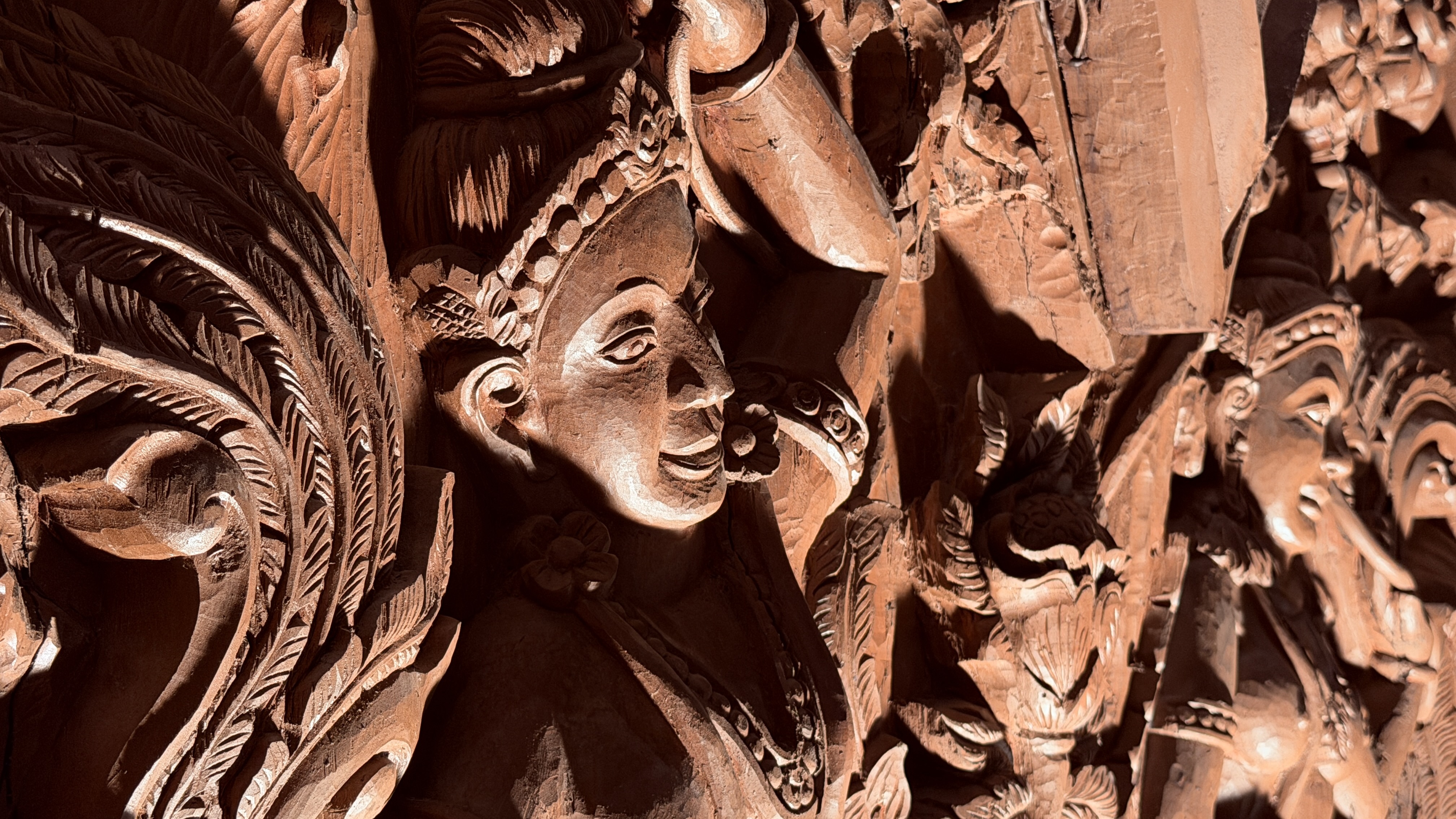
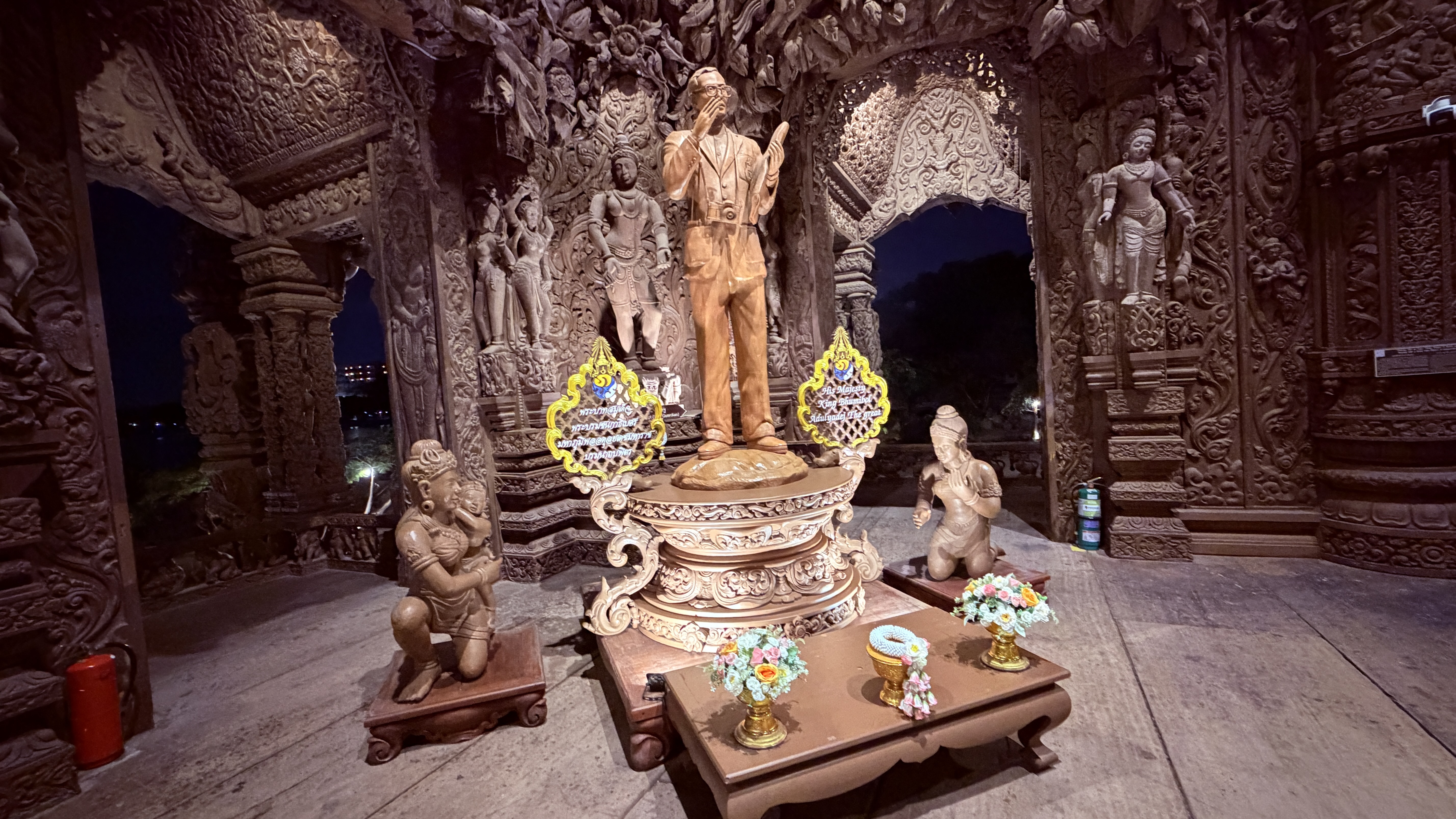
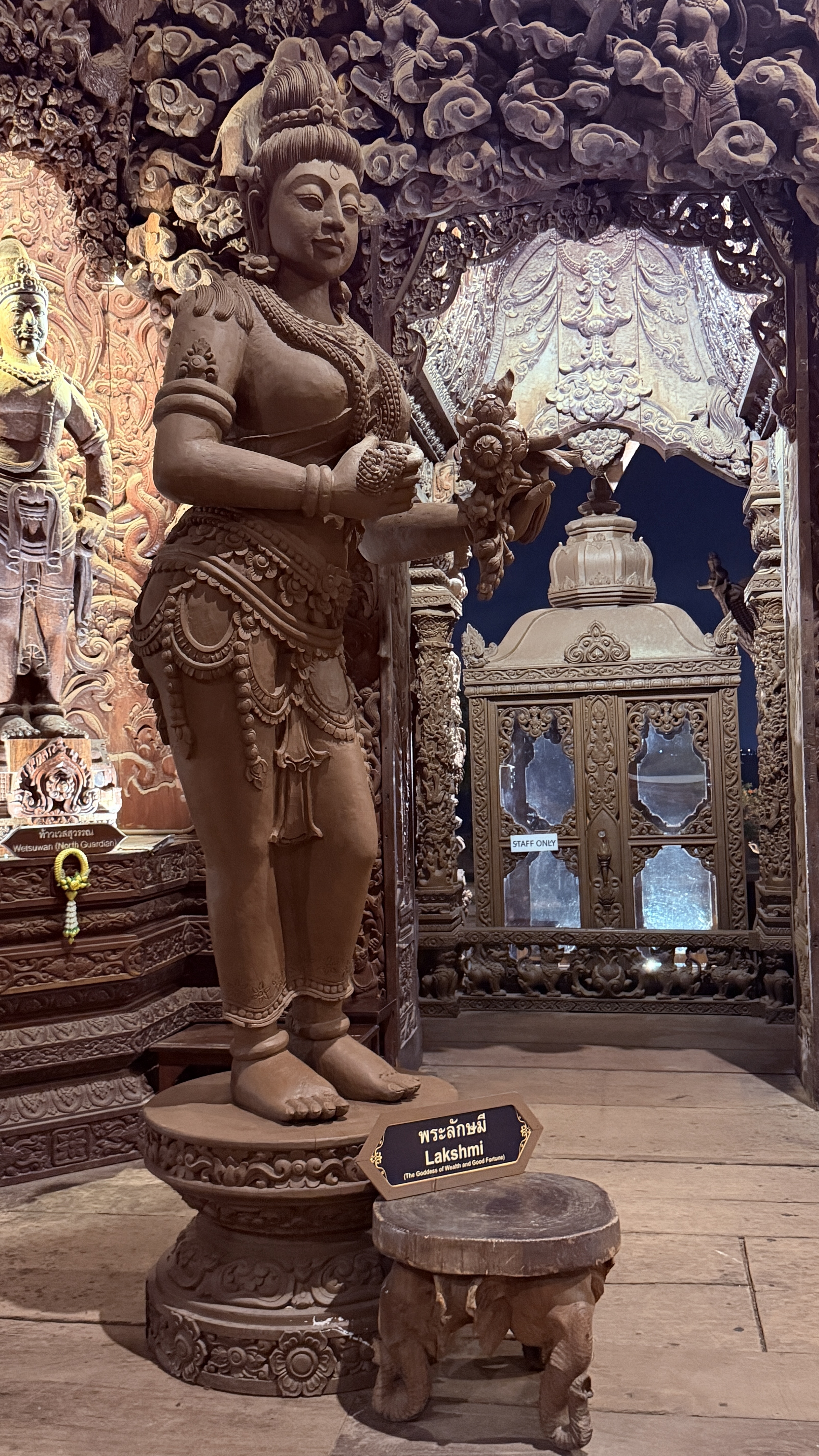
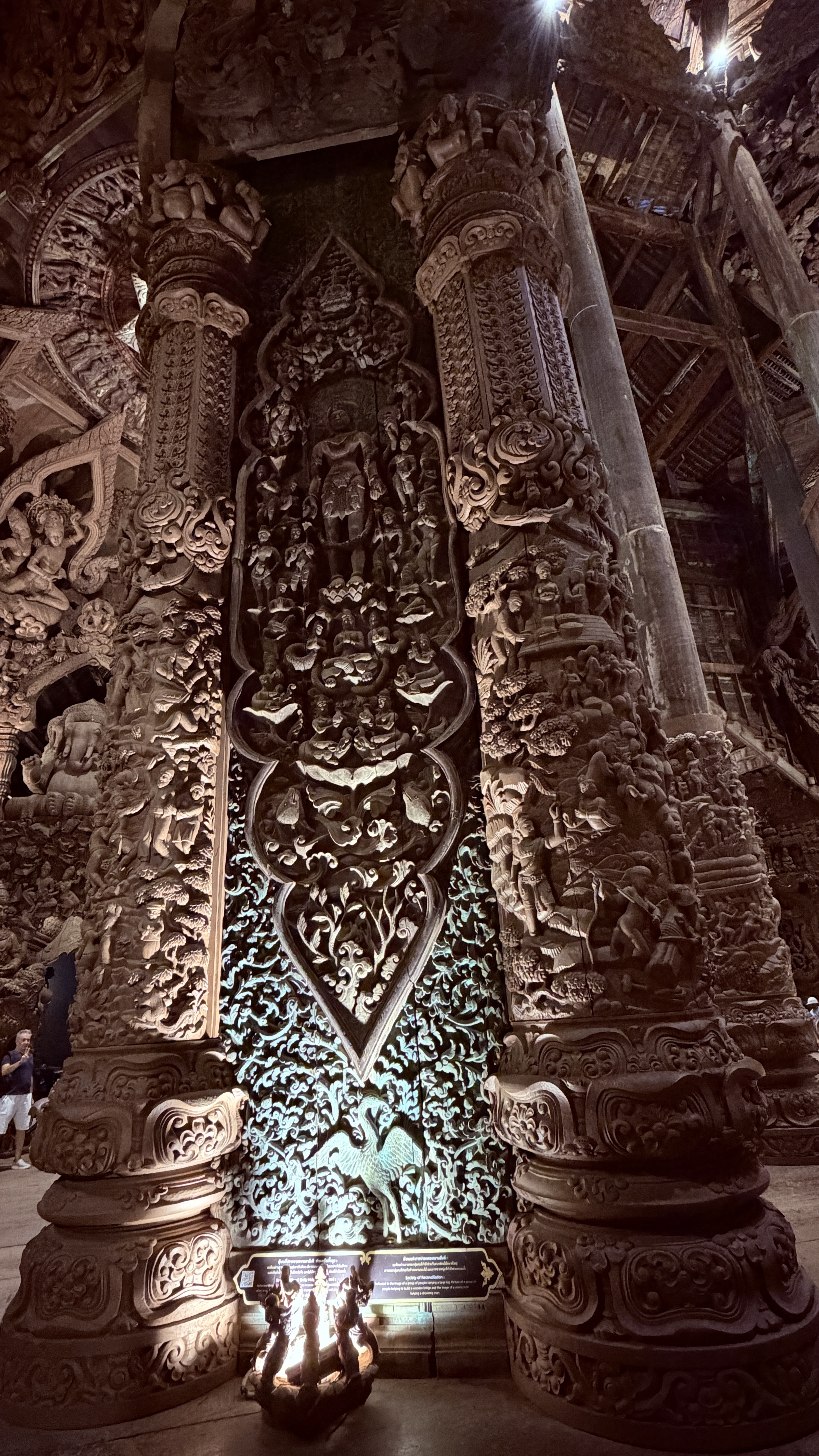
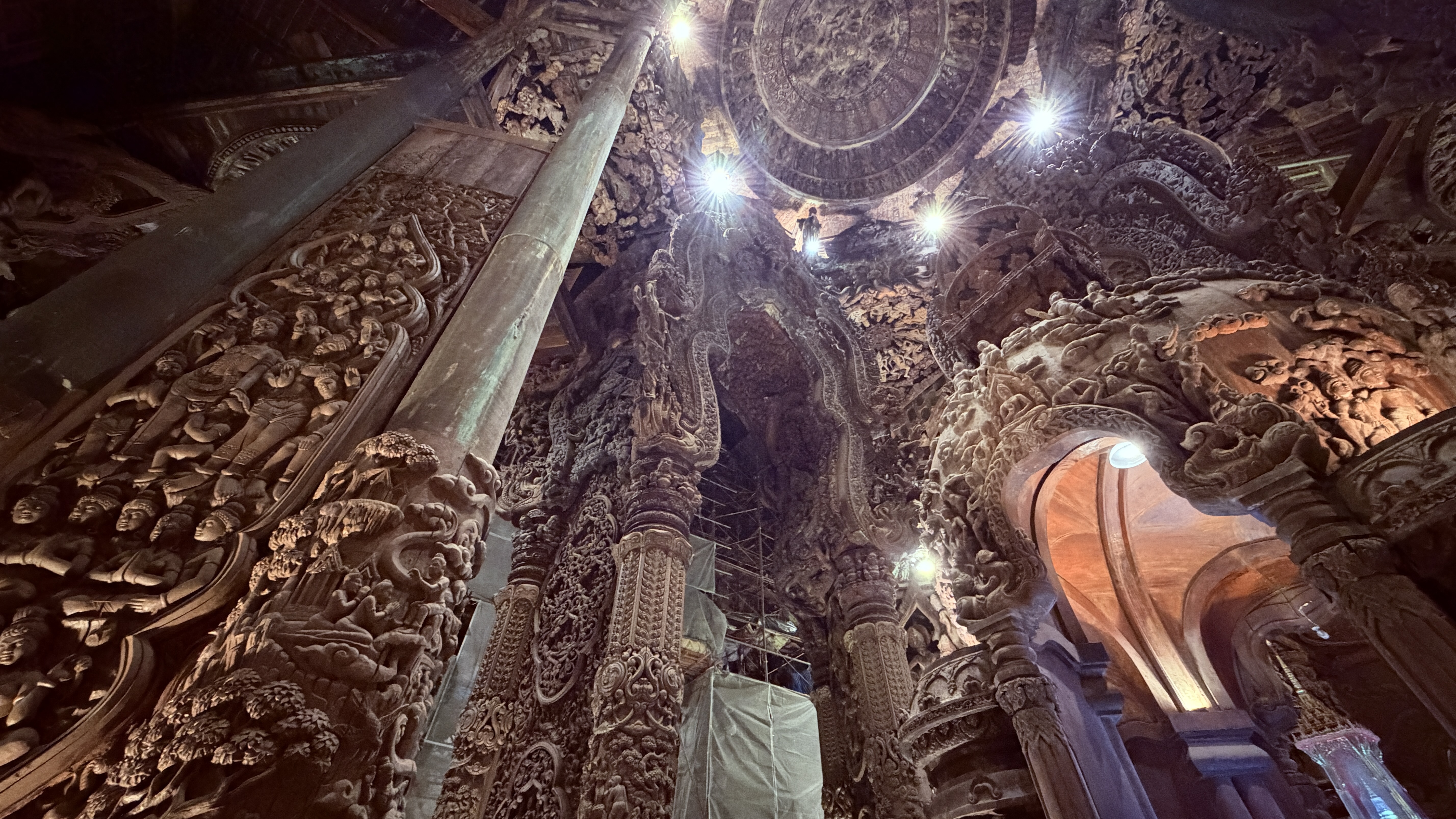
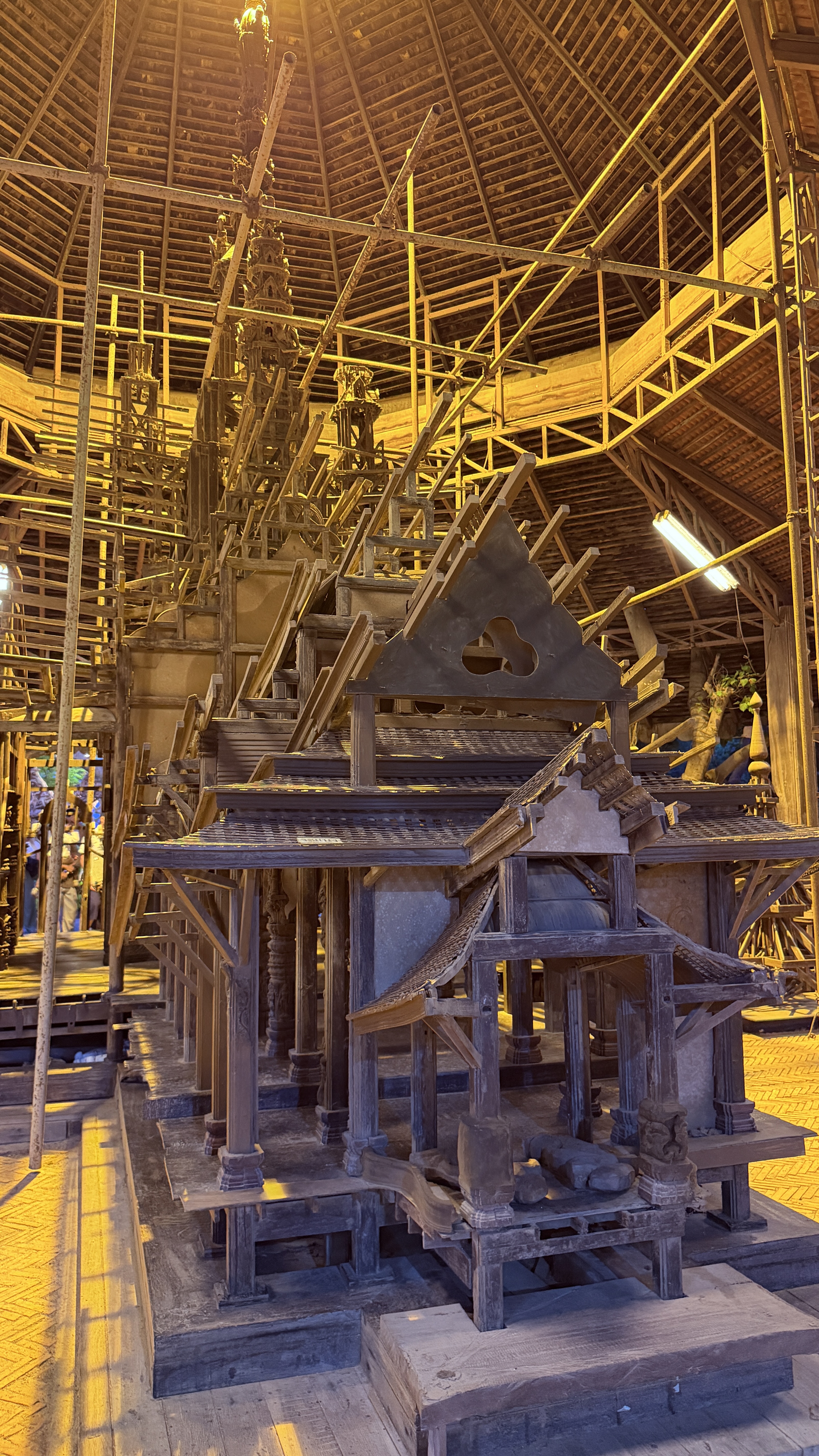
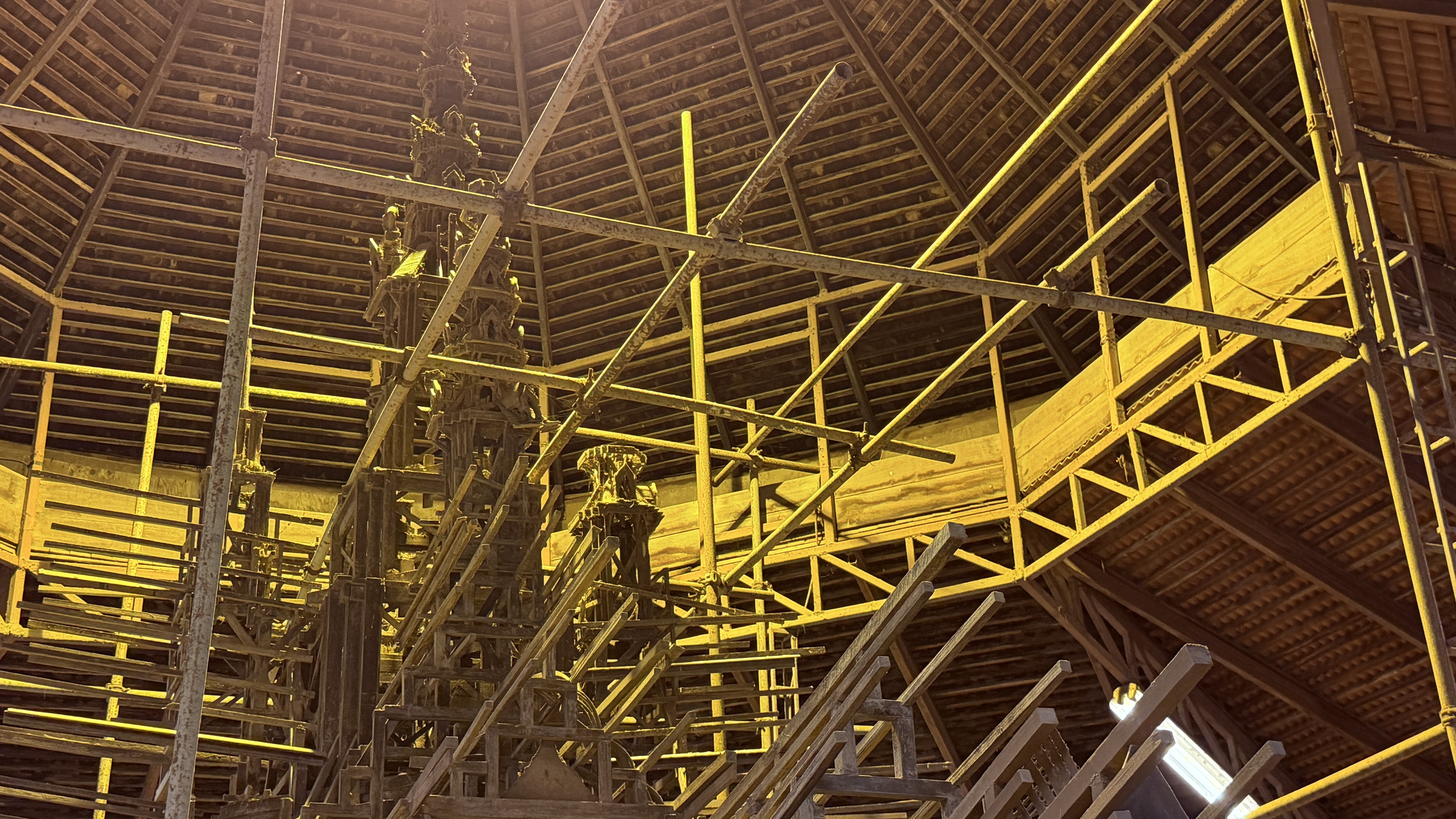
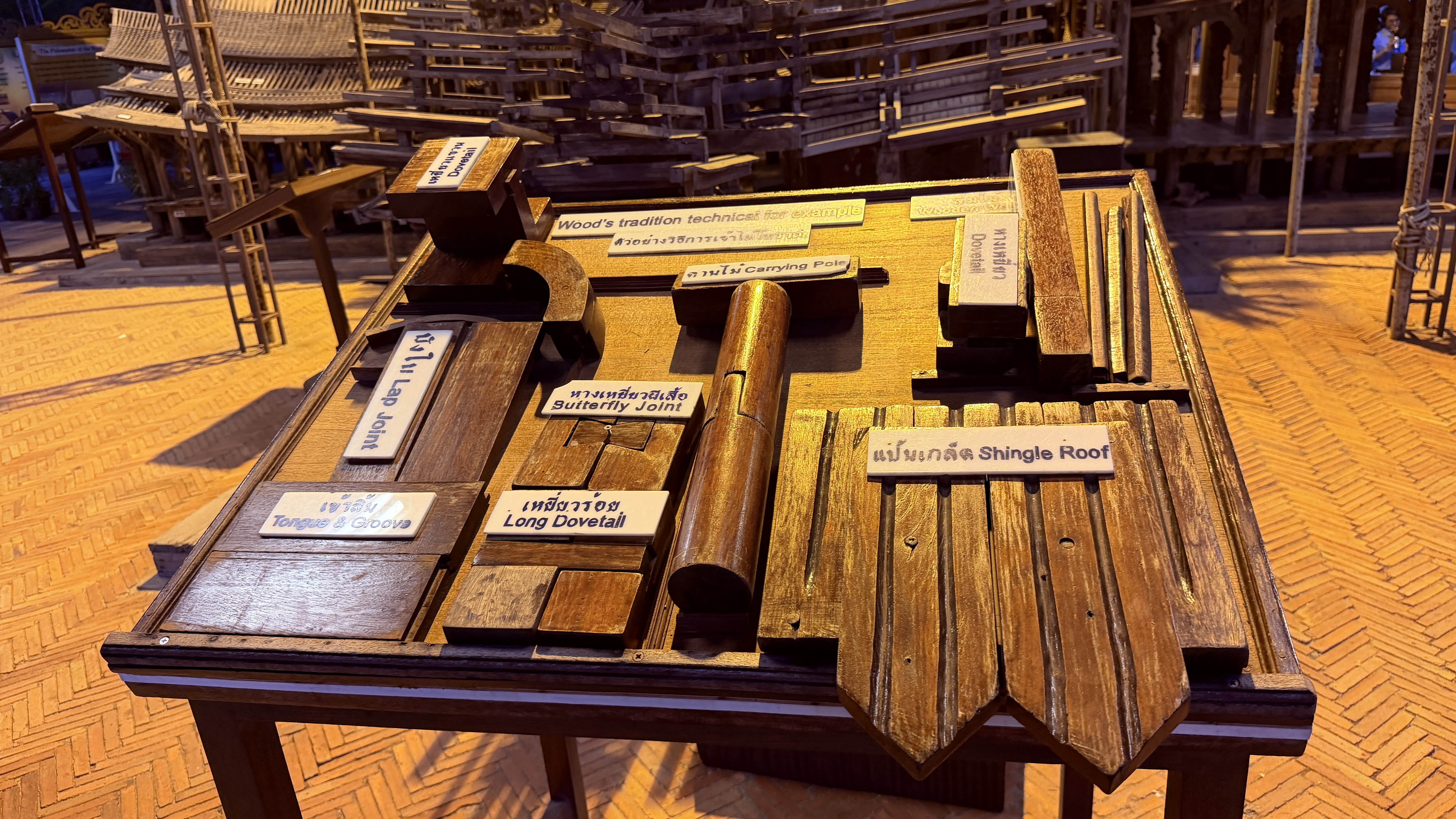
The Sanctuary of Truth is a still-unfinished wooden temple-museum in Naklua, Pattaya, Thailand, commissioned in 1981 by Thai businessman Lek Viriyaphan. Built entirely from hardwoods (Mai Deang, Mai Takien, Mai Panchaat, and teak) using traditional Thai joinery with no metal nails, it’s a hybrid of a temple and castle themed on the Ayutthaya Kingdom and Hindu and Buddhist beliefs, filled with hand-carved wood idols and sculptures.
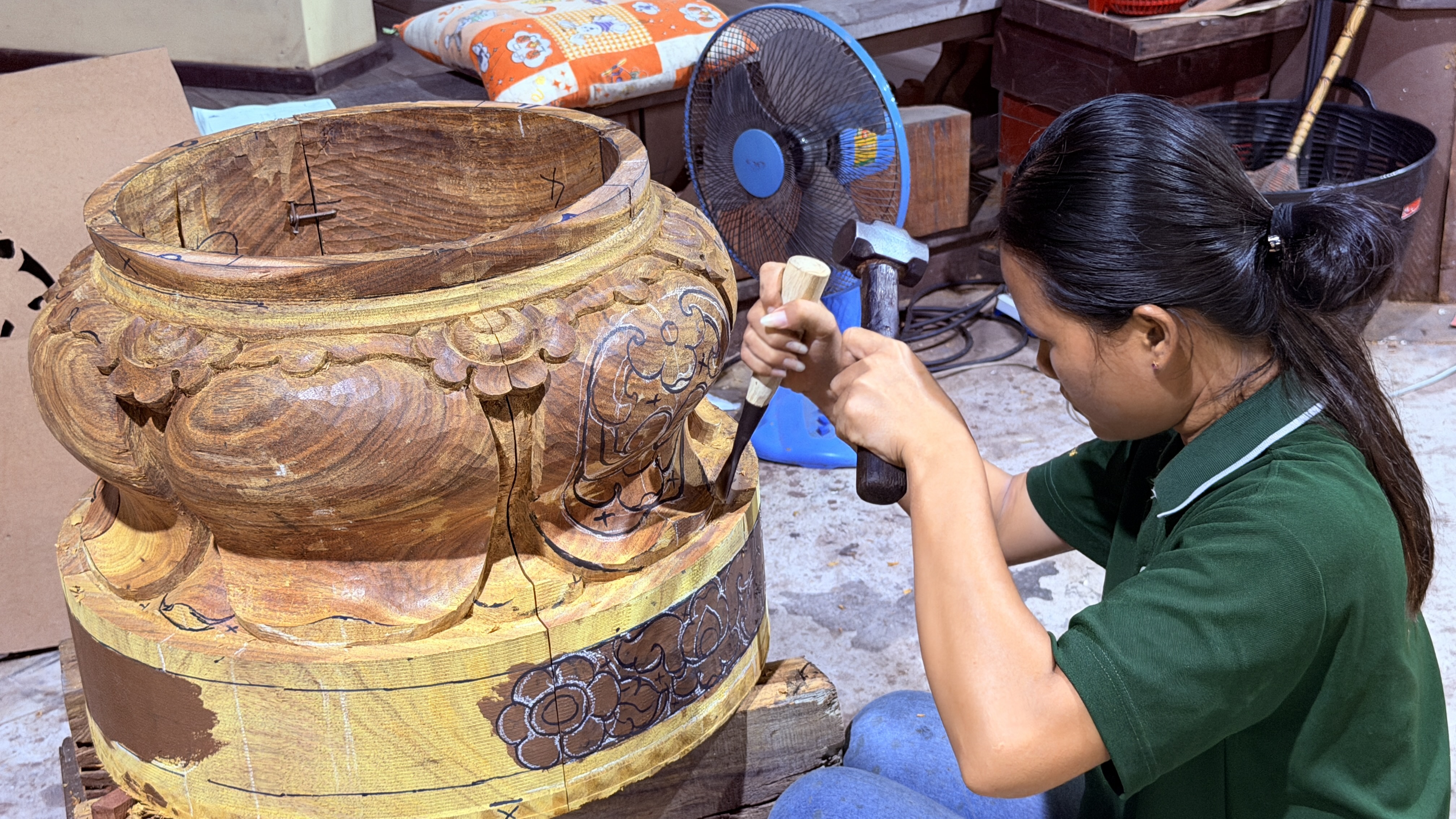
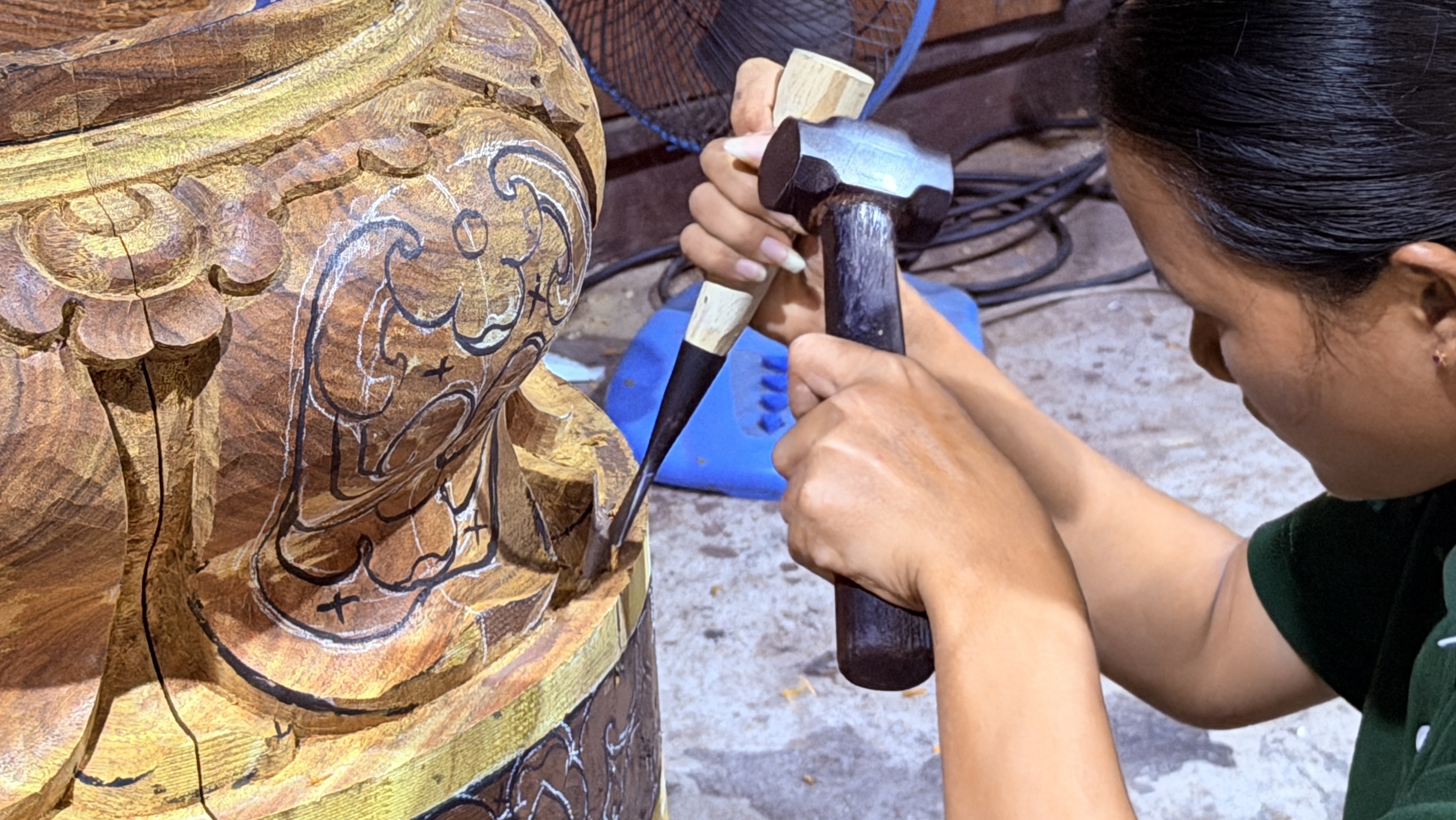
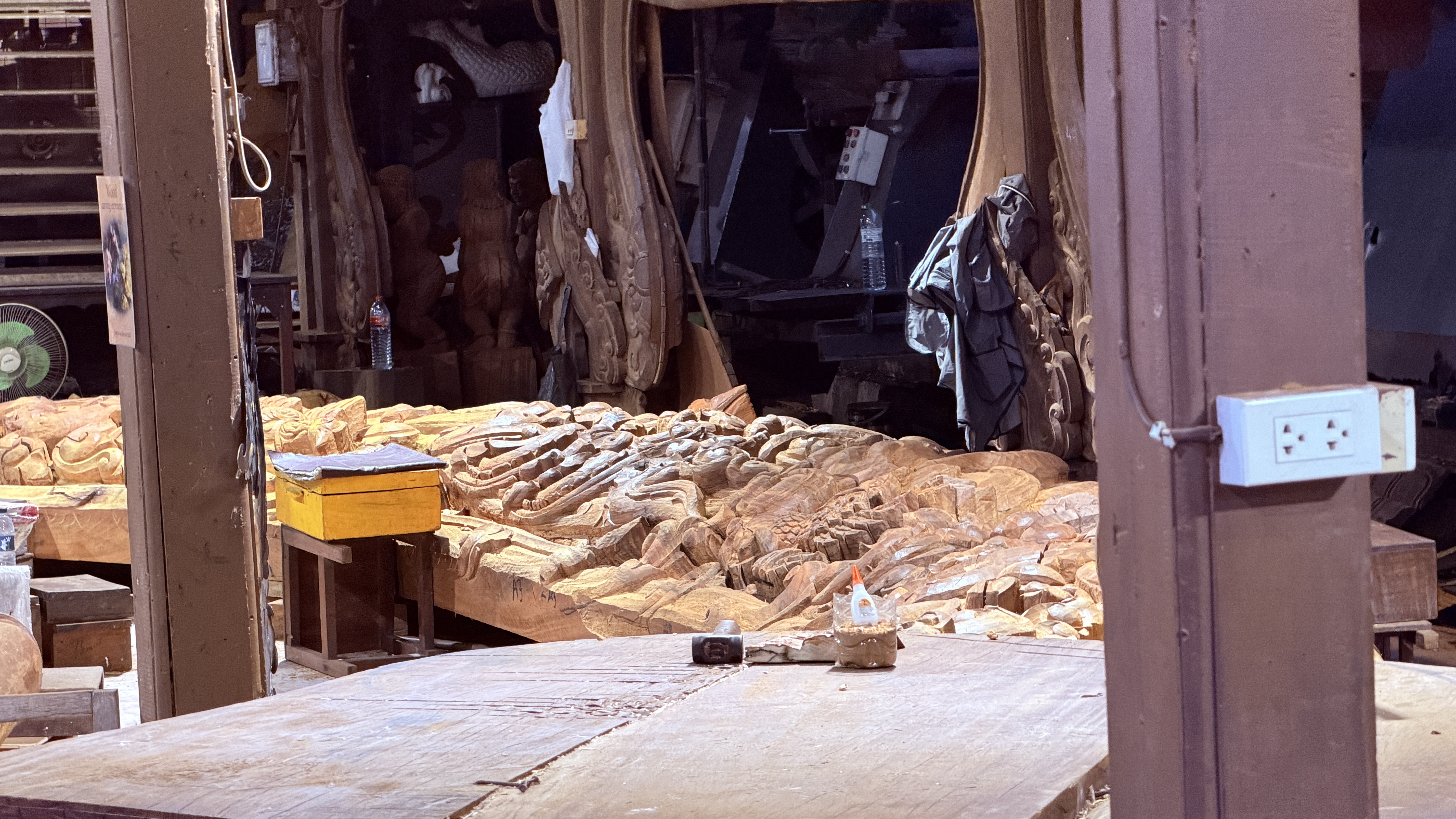
Standing 105 metres tall, it’s one of the tallest wooden structures in Thailand. The site is divided into four directional halls plus a central section, each exploring different philosophical themes — cosmology, the classical elements, family, and Hindu deities like Brahma, Vishnu, and Shiva — blending Thai, Khmer, Chinese, and Indian artistic influences. It doubles as a working craft site, where visitors (with hard hats) can watch artisans still carving replacement pieces, and functions today as a museum, art gallery, and cultural attraction rather than an active place of worship.
Sources:
“Who are we? Where are we from? How do we live our lives? And what is a life goal?”
An age old philosophical question answered by ‘The 7 Truths”,
Those truths, also tell us a lot about how the Thai mindset and answers my earlier question.
The Seven Truths of Life – Sanctuary of Truth
1. First Truth – “Who are we? Where are we from?”
Represented by the four elements (Earth, water, wind, fire), symbolizing the equality of all humans regardless of race, religion, or condition.
2. Second Truth – “How do we live our lives?”
Depicts the human life cycle — birth, aging, and pain — as the natural law shared by everyone, despite differing paths.
3. Third Truth – “The End of Life”
Illustrated through the Buddha’s relics, reflecting on death and how we leave the world as we entered it — with nothing but what we’ve given to others.
4. Fourth Truth – “Samples of Civilization”
Honours great Eastern civilizations and the philosophies and life principles they left behind for future generations.
5. Fifth Truth – “What is a life goal?”
Offers guidance for setting and pursuing life goals, shown through the pillars surrounding the castle.
6. Sixth Truth – “Society is like a two-sided coin”
Explores the good and bad within society, and the path of compromise between them.
7. Seventh Truth – “The beginning of society”
Centres on family as the foundation of values, beliefs, and personality — honouring the love and sacrifice of parents.
Source: https://sanctuaryoftruthmuseum.com/7-pillars/